
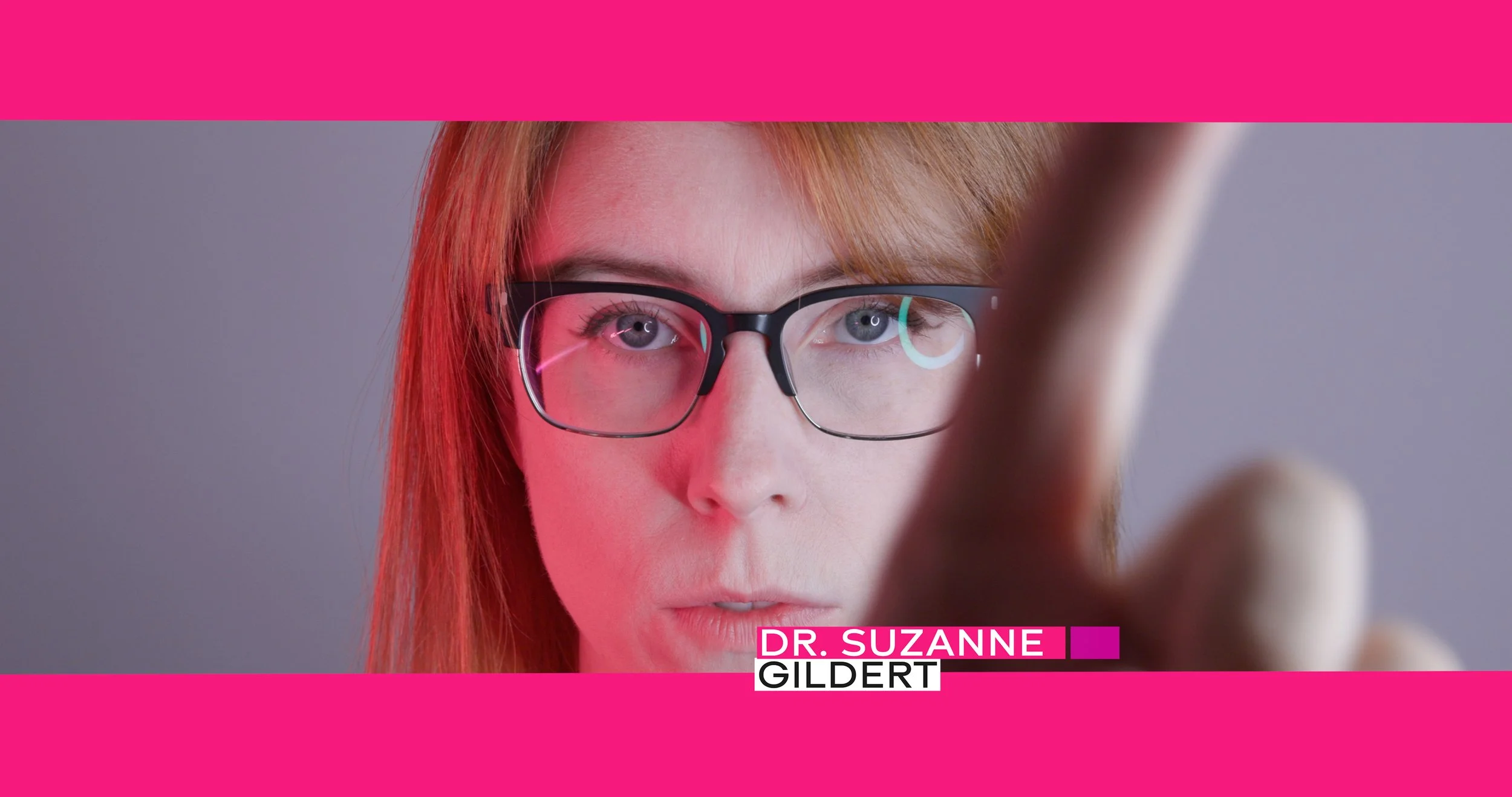
Bio
Dr. Suzanne Gildert is the CEO and founder of Nirvanic AI, a frontier neolab in Vancouver, Canada building a new kind of foundation model that lets robots learn on the job and keep learning in our unpredictable world. She is named as an inventor on 67 filed U.S. patents in robotics, AI and quantum computing.
At Nirvanic, her research is exploring how to enable robots to learn continuously from present-moment experience, updating their understanding of the world in real time. This approach departs from conventional systems trained on static, historical datasets, which often struggle to generalise beyond their training. Quantum computing is used to accelerate how these robot minds plan.
She previously co-founded two robotics companies: Sanctuary AI, building human-like intelligence in General Purpose Robots, and Kindred AI, developing industrial-AI robotics. Kindred was acquired by Ocado in 2020, and Sanctuary is a world-leader in robotic hands.
Suzanne has deep expertise in quantum computing from her time at D-Wave where she ported AI algorithms to D-Wave’s quantum annealing hardware. She created quantum algorithms for D-Wave customers including NASA and Lockheed Martin, developed quantum machine learning algorithms for training neural networks and classifiers, and pioneered an online cloud service for quantum application developers.
Suzanne holds a Ph.D. in experimental quantum physics from the University of Birmingham in the UK, near her hometown of Bolton. She is also a published digital artist and painter.

Career
Nirvanic
In 2024, Suzanne founded Nirvanic AI, a frontier neolab building a new kind of foundation model for robots. As CEO, she is leading Nirvanic to develop adaptive robot minds that learn from experience and keep learning on the job. Nirvanic is currently in stealth mode.

Sanctuary AI
Suzanne co-founded humanoid robotics company Sanctuary AI in January 2018 becoming its co-CEO and later CTO. She led the creation of industrial-looking general purpose robots with “human-like” intelligence, and designed their cognitive architectures.
Gildert is named as an inventor on more than a dozen of the company’s U.S. patents. The technology won a TIME Magazine innovation award in 2023.
The company’s flagship humanoid robot, the 5-foot, 7-inch tall “Phoenix” system, is designed to learn to do work tasks autonomously with its AI control system called “Carbon.”

Kindred AI
Suzanne co-founded Kindred AI in 2014 with the goal of creating human-like intelligence in General Purpose Robots. Kindred opened 3 offices, in Vancouver, Toronto, and San Francisco, and she grew the company to more than 150 employees.
Suzanne pioneered a method to train robots to behave like humans by combining tele-operation systems with machine learning. The technology worked with robots that had sensors, actuators and outputs that were analogous to the perception and actions of an operator. These “pilots” would wear data-transmitting gear to perform and teach the robots the underlying actions of work, such as pick, place, look, grasp, say, slide, halt and others.
Kindred spun off its Artificial General Intelligence (AGI) research division in January 2018, and the company was sold to Ocado for $262 million USD ($339 million CAD).

D-Wave Quantum Systems
In 2010, Suzanne immigrated to Canada to begin her quantum career at D-Wave — the world’s first quantum computer company — in Burnaby, British Columbia. She published several scientific papers, including in the prestigious scientific journal Nature, showing that quantum computers could solve certain kinds of problems that are impossible for classical computers to perform.
She began as an experimental quantum physicist, testing and calibrating quantum-computer-control circuits. When she moved into technical sales and marketing, she designed and ran a quantum algorithms training course for D-Wave customers including NASA and Lockheed Martin. She also developed quantum machine learning algorithms for training neural networks and classifiers, and pioneered an online cloud service for quantum application developers.

University of Birmingham
Suzanne’s career began as a PhD student and then Postdoctoral researcher at the University of Birmingham, UK. Her PhD thesis, “Macroscopic quantum tunnelling effects in Josephson junctions,” explored the quantum effects of superconducting components in quantum computers.
She worked on the design of superconducting electronics, quantum devices (including qubit design), and the design and build of low-temperature measurement apparatus including custom dilution refrigerator equipment.

Suzanne with her father Bill Gildert who inspired her to pursue a career in physics and electronics.